Saturday, June 03, 2006

The "Ritual of Judas"


The "Ritual of Judas" in the Philippines' Panay Island is interesting. Professor Rosario C. Lucero of the University of the Philippines, in his article in the Philippine Daily Inquirer, describes the Holy Week ritual in this way:

[T]he giant effigy of Judas -- with a giant wooden phallus sticking out through a slit in his robe -- is paraded around the barrio with much noise and fanfare. The parade ends at the barrio plaza, where a tripod of tall bamboo poles has been erected and from which dangles a noose of abaca rope. The noose is slipped around Judas's neck, a fuse sticking out of one shoe is lighted, and he explodes in a burst of firecrackers .

The scene apparently reenacts the death of Judas who "went and hanged himself" (Matthew 27:5). But the ritual does not settle for a too quiet death of Judas. Judas, the traitor, must perish in an outrageous and outlandish way. Thus,

firecrackers were stuffed inside the effigy, along with flammable materials of rice straw and abaca cloth. His head, being the biggest part of the effigy, took the longest to explode because it was stuffed with the largest and most numerous firecrackers. But the loudest blast occurred in his testicles, which were also disproportionately large so as to hold the strongest explosives.

The "gruesome" scene is similar to the account of the Gospel writer, Luke, in Acts 1:18:

"Falling headlong, he [Judas] burst open in the middle and all his bowels gushed out."

Interpreting this passage, a second century A.D. Christian writer, Papias says:

[Judas'] flesh swelled so much that he could not pass where a cart could easily. His eyelids swelled so much that he could not see any light at all, and his eyes could not be seen even with a doctor's instruments, because they had sunken so far from the surface of his face. His genitals were more enlarged and unsightly than any other deformity, while blood and worms flowed from all over his body, necessarily doing great harm just by themselves.

Both Panay's Ritual of Judas, Luke and Papias agree to shame and humiliate the traitor by reducing to futility his private parts--the male symbol of power.

In the Panay ritual, that power is transmitted to the follower who gets what remains of the blasted Judas. Professor Lucero writes:

The effigy is consumed by the fire but the phallus, carved out of moist, fresh wood, drops unscathed to the ground, and there is a mad scramble among the boys for the prized symbol.

Here, the ritual differs from Papias'. Whereas Judas' burnt relic recreates to a phallic symbol of power, for Papias, whatever is left of Judas, even his odor, must be avoided by all means:

on account of the stench the place is desolate and uninhabited even until now, and that today no one can go through that place without stopping up his nose with his hands, because the stench of his flesh spread out over the land so much.

Friday, May 26, 2006

What's wrong with doing what you're supposed to do?


Read first Matthew 25:14-30.

A Roman denarius from the mid-first century B.C.E found under a doorway at the Qumran excavation site in 1955
We love to tell stories. We like to listen to stories. Stories are imitations of our experiences in life. They present a better world which listeners and readers can dream of. At times, they shape our decisions in life. We come up to a crucial decision after watching a good movie, for instance. Many of us who grew up in the Ilocos region in the early 70's learned what is right from wrong by listening through the radio the Stories of Uncle Pete (Sarsarita ni Uncle Pete).

The parables of Jesus are also stories, but not like ordinary stories that have happy endings and clear moral lessons. Parables, by nature, leave the listeners with more questions in mind. The word, "parable", comes from the Greek paraballo meaning, "to throw beside". Parables, literally, "throw beside" the listeners's minds —to think and rethink. A good example is the Parable of the Talents (Mt 25:14-30).

The master in the parable entrust his "talents" to three servants. How much is one talent at that time (1st century A.D.)? ---6,000 denarii! One denarius is a day's wages for an ordinary laborer. One talent would be worth twenty year's wages; two talents = forty years' wages; five talents = a hundred years' wages! Who in their right minds entrust such extremely huge amount?

The servant who receives the five talent immediately "went and traded with them" (and presumably the second who receives two talents does the same). That implies that both engages in some kind of business. The third servant , receiving one talent, buries the money to the ground. Don't think that the guy is stupid. That's the normal and safest way to keep money that belongs to others. Jewish writings have something on this: "Money can only be guarded by placing it in the earth. . . Anyone who buried a pledge or a deposit immediately upon receipt of it, was free from liability." And to the two servants who invest the talents, this is what Jesus says: "If you have money, do not lend it at interest, but give it to one from whom you will not get it back" (from the Gospel of Thomas but see also Luke 6:35). So who is doing right?

When the master returns, accounting begins. The two servants who received more have doubled the amount. Impossible! The rate is incredibly higher than Five-Six, a Filipino money lending business where five currency units are loaned without collateral and expecting six in return immediately. The legal interest rate in the first century was only 12 percent! But note that the third servant, who did the right thing, is now condemned because he is "lazy" and does not know that his master "harvests where he does not plant". Amazing.

What's the end of the parable? That servant is thrown "into the darkness outside, where there will be wailing and grinding of teeth." We are not told exactly where is this place, but surely a place of shame. When we grind our teeth in sleep, they say we carry a lot of worms in our stomachs ("binubulate"). Poor guy, he was just doing what he was supposed to do.


The following essay will appear in the SVD Bible Diary 2007. This book offers a daily explanation of the Gospel reading in the Mass, authored by
members of the missionary congregations inspired by St. Arnold Janssen. It will be out in the bookstores soon. You can place your order in advance:
Logos Publications
P.O. Box 1375, 1099 Manila, Philippines
e-mail: info@logospublications.com
www.logospublications.com

Tuesday, May 16, 2006

Jesus on Illegal Fishing

The Butanding (Whale Shark), the "Leviathan" of Donsol, Sorsogon, Philippines, getting extinct due to illegal fishing.

Read first John 21:20-25

The gospel reading contains the very last words of the last of the four gospels, gospel, the Gospel of John. The Risen Lord appears to two acknowledged leaders of the early Church, Peter and the Beloved Disciple. This unnamed disciple tells us that he wrote this gospel as his testimony and that "there are also many other things that Jesus did" but were longer recorded. What could these be?

We can think here of a beautiful saying of Jesus quoted by St. Paul but not recorded in any of the four gospels. In reminding the leaders Christian community about their charity toward the poor, St. Paul says: "We must support the weak, remembering the words of the Lord Jesus, for he himself said, 'It is more blessed to give than to receive' (Acts 20:35)." There's an anecdote though about a boy who boasts that his father has been living this teaching of Jesus even in his work, giving rather than receiving. Asked what his father's job is, the boy responds, "He's a professional boxer!" Joking aside, we witness until today many Christians living these words of wisdom.

The so-called Gospel of Thomas, written around 100-110 AD, although it is not part of our Sacred Scripture, could have preserved some earliest traditions of the teachings of Jesus not found in our four gospels. Here's an example, Jesus' teaching on wise fishing: "The human being is like a fisherman who cast his net into the sea and drew it up from the sea full of little fish. Among them the wise fishermen discovered a fine large fish. He threw all the little fish back into the sea, and easily chose the larger fish. Anyone here with two good ears had better listen!" If we were to have "good ears", there’ll be no more illegal fishing and our seas and rivers would be teeming with life.

Monday, May 15, 2006

Satan, the Prince of Demons

Lilith Exorcised on a Persian Incantation Bowl

(Read first Mark 3:22-30)

Some people have been accused as "drug lords", or "jueteng lords". A former jueteng lord was even asked by the government to lead the campaign against jueteng because he was supposed to know the "ins and outs" (the operations) of this illegal gambling game.

In time of Jesus, the most notorious leader of the underworld is the "demon lord", or as the Gospel writer calls, "the prince of demons". He has even an alias, "Beelzebul" which could either mean,"Lord of the Flies" or, more exactly, "Master Baal". Baal was Yahweh's nemesis in the Old Testament. The prince of demons, being the master, directs the activities of the demons under him. Demons were thought to cause sicknesses and deaths of children. In cultural world of Jesus, there were more demons or bad spirits than human beings.

One such demon was Lilith known for attacking and killing children especially at night. To ward off this terrible demon, people have to wear amulets, inscribe incantation formula in their dining bowls, and put tassels ("zitzit") in garments. Jesus is said to have even worn such tassels (Mk 5:28; 6:56). In the world that was believed to be overpopulated by evil spirits, exorcism was an in-demand job. The exorcists, people trained to cast out demons, were popular and always on call.

But demons were also powerful and stubborn. They could not be cast out just like that. Even the combined efforts of the disciples could not cast out the evil spirit that had made a boy epileptic (Mk 9:14-29). It would need the demon's boss, the master demon, to terminate his job of possessing the boy. Since, Jesus never had a failed exorcism, people began to think he could be the "prince of demons".

The Gospel above leaves us with a tinge of irony. On the one hand, we readers know clearly Jesus is not the prince of demons. On the other hand, Jesus is Lord, in the sense that he has lorded over, confined, and ovecome the power of evil in the world. The last book of the bible assures us:

Satan, who deceived the whole world, was thrown down . . . Then I heard a loud voice in heaven say: "Now have salvation and power come, and the kingdom of our God and the authority of his Anointed. For the accuser of our brothers and sisters is cast out, who accuses them before our God day and night. They conquered him by the blood of the Lamb and by the word of their testimony; love for life did not deter them from death (Rev 12:9-11).

Sunday, May 14, 2006

"Hate" Your Family

In the news recently, the retired supreme court justice Hilario Davide submitted to the President his proposals for the much needed electoral reforms. Among them is the ban on political dynasties and nepotism, a recommendation he had submitted to thge 1971 Constitutional Convention and the 1986 Consitutional Commission.

Here's my interpretation of Luke 14:25-33, Jesus' possible teaching against nepotism. The article is to be published in the 2007 SVD Bible Diary:
----------------------

Why did Jesus teach his disciples to "hate" their families?

"Family first before country." This could be an attitude indicating a fractured culture. "The Filipino is not community-driven, certainly not nation-driven" as one one writer laments. Worse is nepotism---favoring relatives or personal friends because of relationship than because of their abilities. As Filipinos, we tend to confuse nepotism with pagmamahal sa pamilya (family loyalty). Yet we know for a fact that nepotism breeds graft and corruption and vice versa.

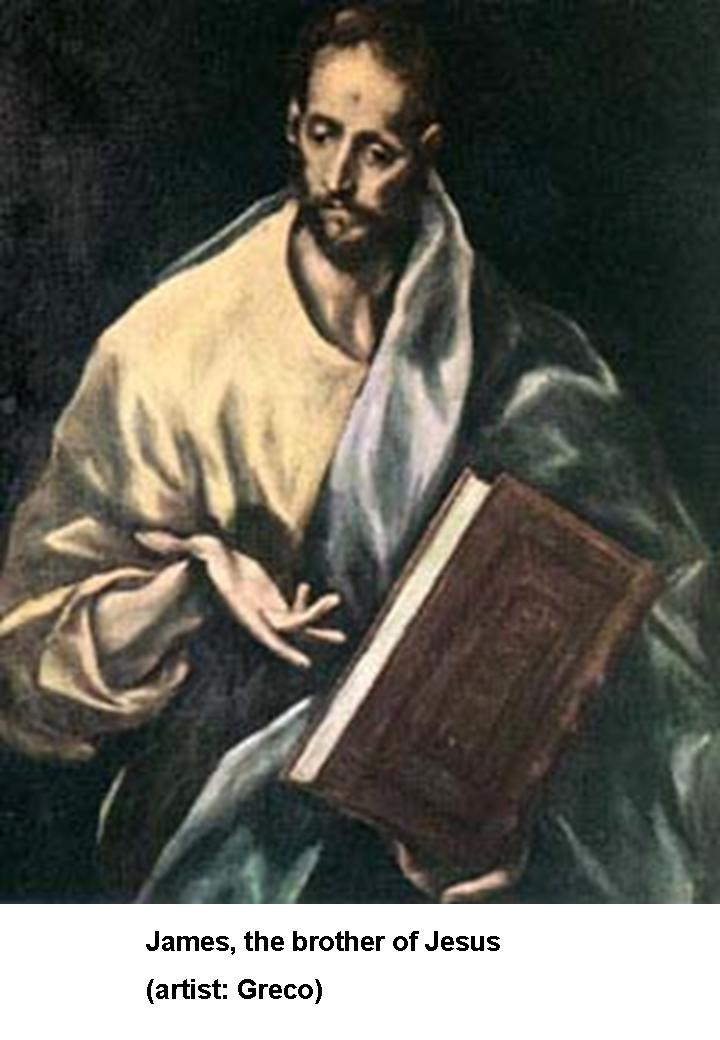
Is it what Jesus up to when he says, "Whoever comes to me and does not hate father and mother, wife and children, brothers and sisters, yes, and even life itself, cannot be my disciple" (Lk 14:26)? Early Christian stories recount that James, the brother of Jesus, (Mk 6:3) is elected the bishop of Jerusalem because he is the kamag-anak ("relative") of Jesus. Does this explain that Jesus is, at times, "anti-family?".

We should not think that Jesus teaches disrespect of one's family. The Old Testament says very clearly: "Honor your father and your mother" (Exod 20:12). Loving one's family is loving God, as in the teaching of Jesus, son of Sira: "Those who respect their father will have long life, and those who honor their mother obey the Lord" (Sirach 3:6). Why then does Jesus, the son of Joseph, teach to "hate one's family?"

In recent years, bible scholars suggest four possible insights on this teaching: (1) Jesus has two types of disciples: those who stay at home and live the gospel in the context of their families and those who are sent out to preach Jesus' message. It is to this second group of disciples that Jesus addresses this teaching to leave behind their families. (2) To break away from the family in that culture may indicate that Jesus disapproves a family that is patriarchal and dominated by men. (3) It may also mean that Jesus is forming a surrogate family, a new family of brothers and sisters that has God as the only father. (4) Having a family is a form of security, leaving home would mean giving up that security to be in solidarity with many people who are homeless and landless, something that the prophets did in the Old Testament.

In the end, Jesus is not against the family. But, he requires his followers to see beyond the confines of their own particular families, a new and bigger "family" whose God is the Father.

Friday, April 21, 2006

Larry Hurtado on the Gospel of Judas

Here's another commentary on the so-called Gospel of Judas by a respected New Testament scholar, Professor Larry Hurtado of the University of Edinburgh School of Divinity.

Eventually, Mario Jean Roberty, a Swiss lawyer who is head of the Maecenas Foundation, which is also Swiss, bought the codex for a reported $1.5 million plus half the proceeds from the future marketing of its contents. In 2004, Roberty struck a deal with the National Geographic Society to finance scholarly conservation and publication. In other words, the various owners of the codex couldn't sell the artifact because legitimate potential buyers suspected it had been illegally obtained. And then Roberty cleverly hit upon the idea of making his money back by marketing the contents of the codex. More

Sunday, April 16, 2006

Judas: Traitor or Pawn?

Reimund Bieringer, professor of New Testament Exegesis, Faculty of Theology, Catholic University of Leuven, Belgium wrestles with the question: Was Judas a traitor or pawn in God's plan? His answers include implications for the theology of the cross. More

Saturday, April 15, 2006

Ben Witherington

Ben Witherington is also blogging the so-called "Gospel" of Judas. He is a Professor of New Testament Interpretation at Asbury Theological Seminary in Wilmore, Kentucky
I was on the phone yesterday with my close friend Dr. A.J. Levine who teaches at Vanderbilt Div. School. She was called in late in the game to give a bit more balance to the group of scholars unveiling the Gospel of Judas. I asked her point blank: " Well A.J. is this document of any importance at all in helping us understand the historical Jesus or the historical Judas and their relationship?" She said unequivocally--- "none whatsoever".
More